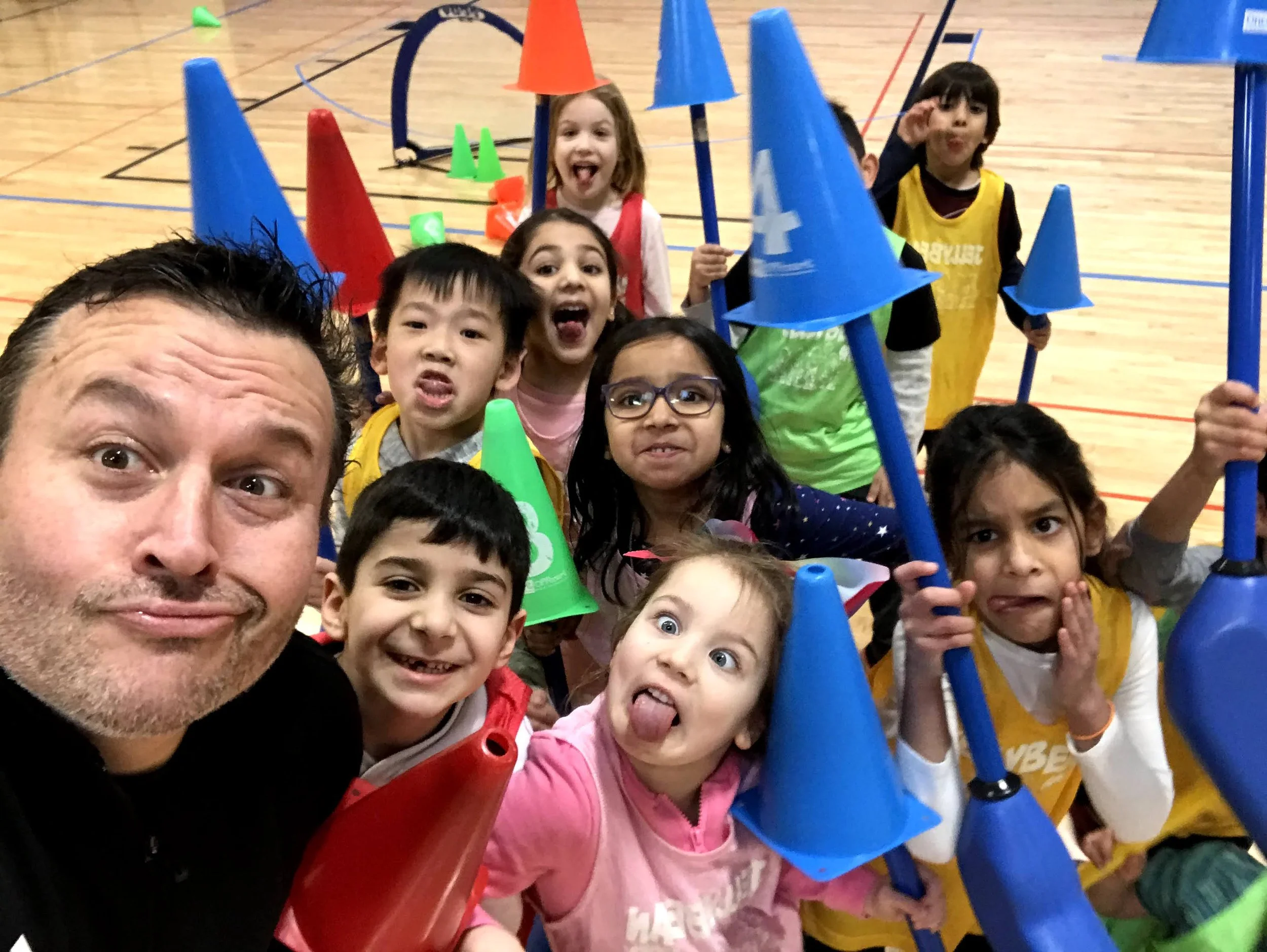
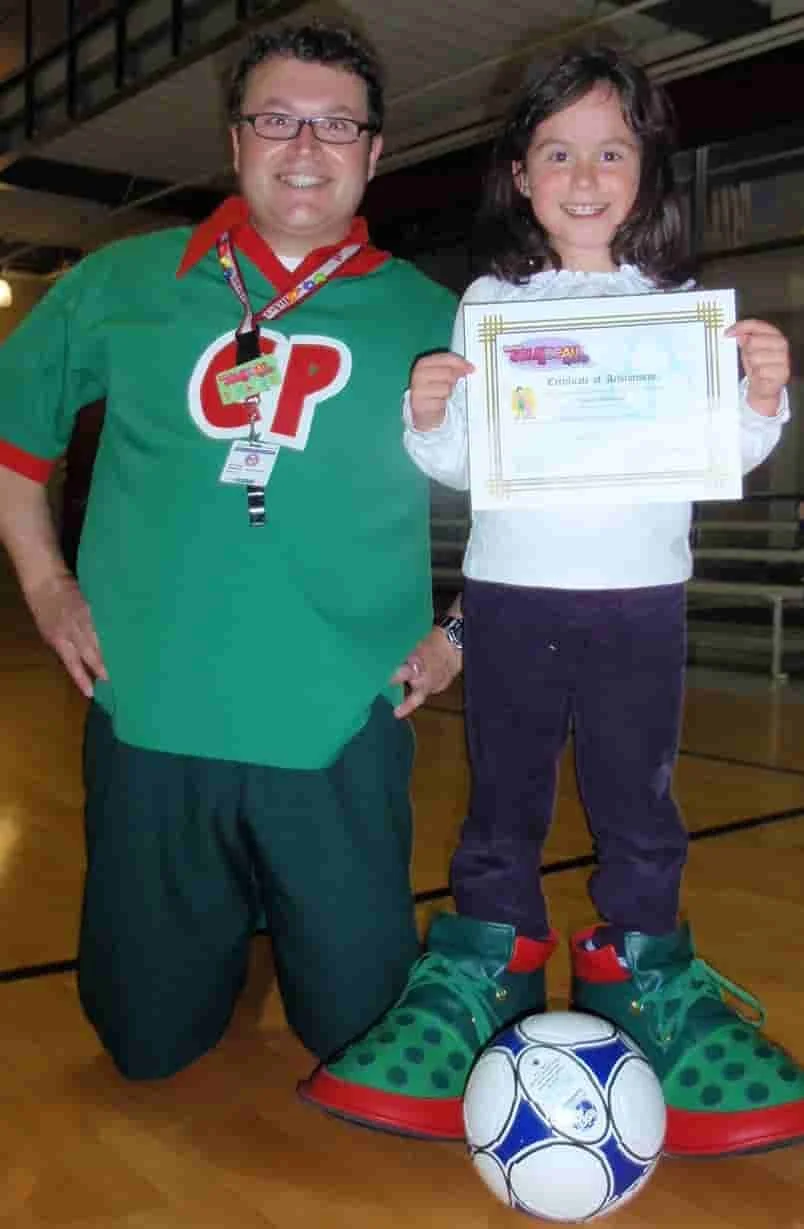
Who is Coach Pickles?
TEACHING METHODOLOGY · EARLY LEARNING SPORTS DEVELOPMENT
The teaching methodology created by Dr. Bradley Kayden, EdD. Serving 15,000+ families over 20+ years with zero serious injuries.

Coach Pickles Teaching Methodology
Created by Dr. Bradley Kayden for early childhood sports education (ages 0-5), it represents a departure from traditional youth sports coaching by prioritizing child-centered language, rapport-building before instruction, imagination-driven motor skill development, and play-based learning over drill-based repetition.
The methodology is integrated within The Jelly Bean Way© curriculum and aligns with The Natural Order of Sport© developmental framework. Over 20+ years of implementation across 15,000+ families with zero injuries, Coach Pickles has established new standards for how young children learn sports—not through conforming to adult-designed structures, but through sports conforming to how children naturally learn.
The Origin Story
What Kids Learn:
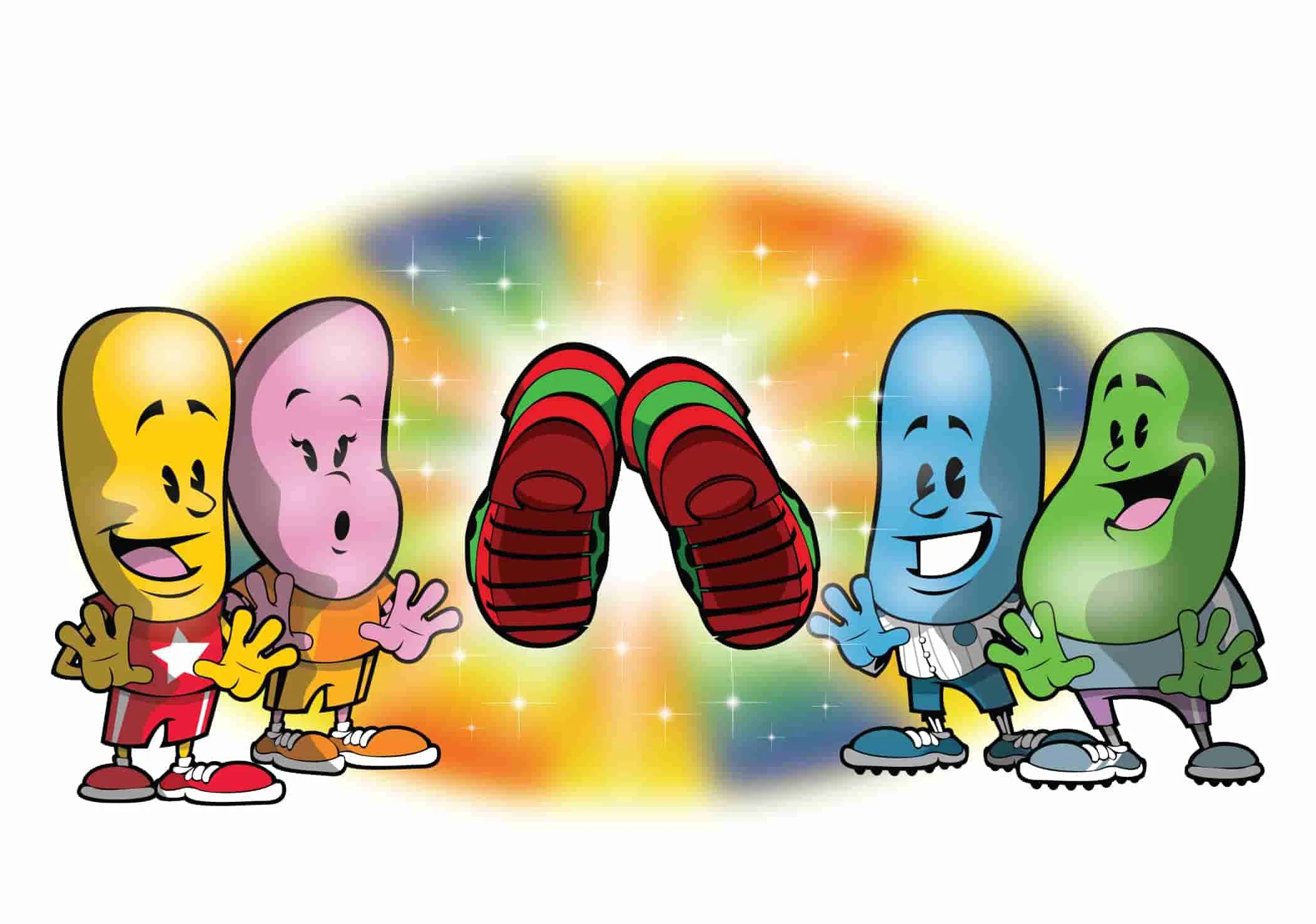
Four magical jelly beans named a curly-haired man "Coach Pickles" after the polka-dots on his magic green shoes brought them to life. Together, they travel through sports portals teaching children sports, The Jelly Bean Way—where kids "lose their laps" (getting moving!), and learn sports laughing so hard they will be on the floor.
What Actually Happened:
Dr. Bradley Kayden found a cool pair of green polka-dotted shoes in a discount bin at a shoe store. They were unsightly and ugly, but he knew the kids would love them. During the first class, wearing them, a group of 4-year-olds announced: "Today you're not Coach Brad. You are Coach Pickles."
He indulged them. And as a result, that class showed better listening, engagement, and joy than all others. The "Coach Pickles" persona became the teaching methodology—exemplifying the "Coach Performer" approach that defines a new coaching order designed specifically for early learners.
The name stuck. Both identities—Dr. Bradley Kayden for institutional credibility, Coach Pickles for cultural connection—now serve the same mission: fixing the structural problem that breaks youth sports before most children ever reach organized programs.
Cultural Elements
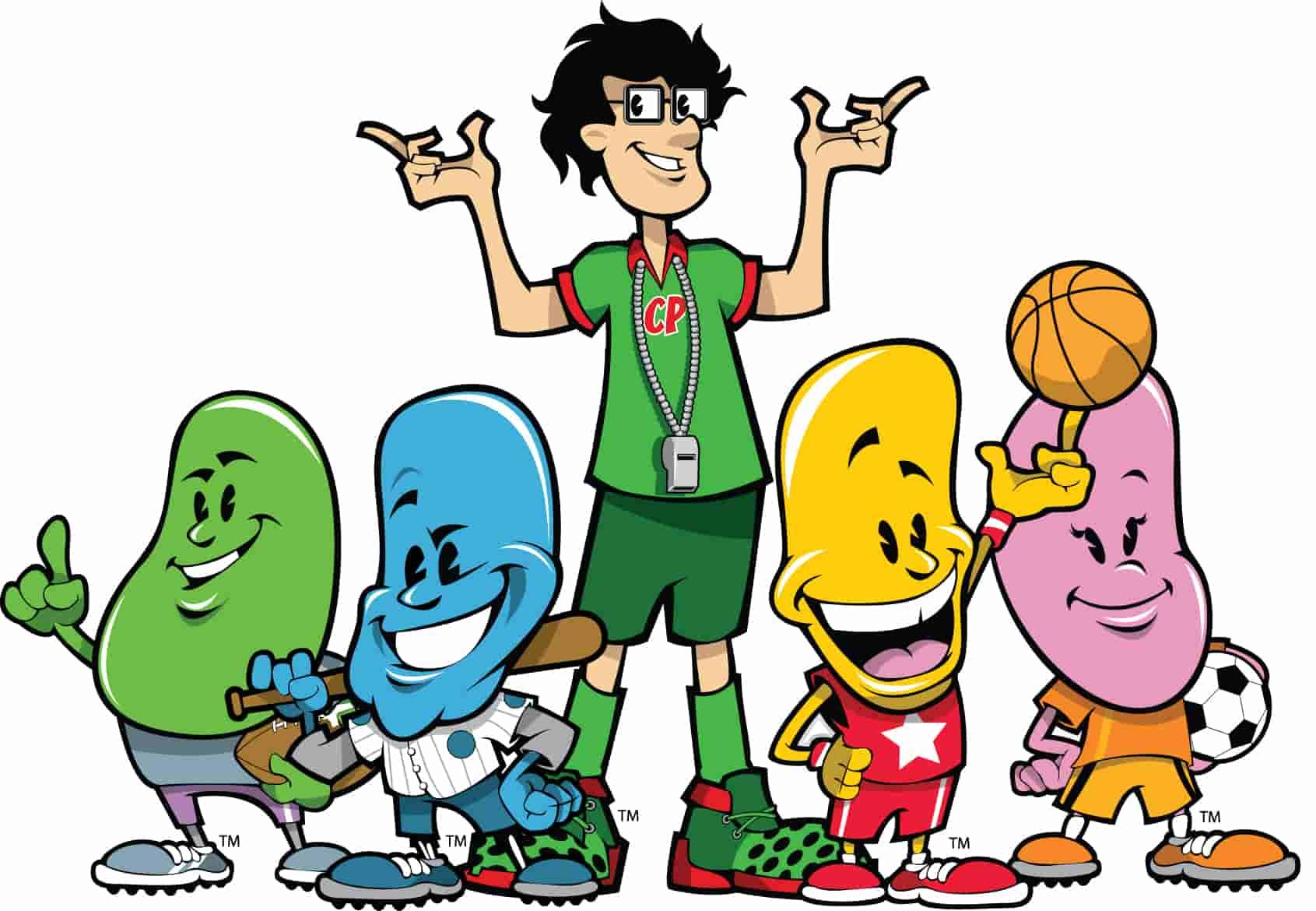
Coach Pickles is accompanied by four jelly bean characters (Jo Jo, Flo, Mo, Jimbo) who serve as mascots in the entertainment and educational content.
THE LEGEND:
"Four jelly beans and one curly-haired man After they named him, he became high in demand. Coach Pickles he became, a name jelly beans brought to fame"
SIGNATURE ELEMENTS:
-The Jelly Bean Sports™️ Theme Song
- "The Jelly Bean Way© (Hip, Hip, HOORAY!)"
- Key lyric: "Lose your lap" (means get up and move!)
- Philosophy: "Sports Made Simple, Learning Made Fun"
- Animation & Characters - Fun, character-driven content designed for toddlers and preschoolers (similar to Sesame Street/Blues Clues style)
- Sports Portals
- Narrative device where Coach Pickles and the jelly beans "fall into a sports portal that leads them to alternate sports realities."
Catchphrases & Kid-Friendly Language
COACH PICKLES CATCHPHRASES:
-Theme song lyrics, ”Hip, Hip, Hooray! We’re teaching you the sports skills to play all day.”
- Introduction to sports tools, “The whistle sounds like a … birdie.”
- Teaches baseline knowledge (possession) - "Is that my ball?"
- Uses Socratic method, “Is it time to go home?”
- Integrates the environment into learning, “Wake up the wall!”
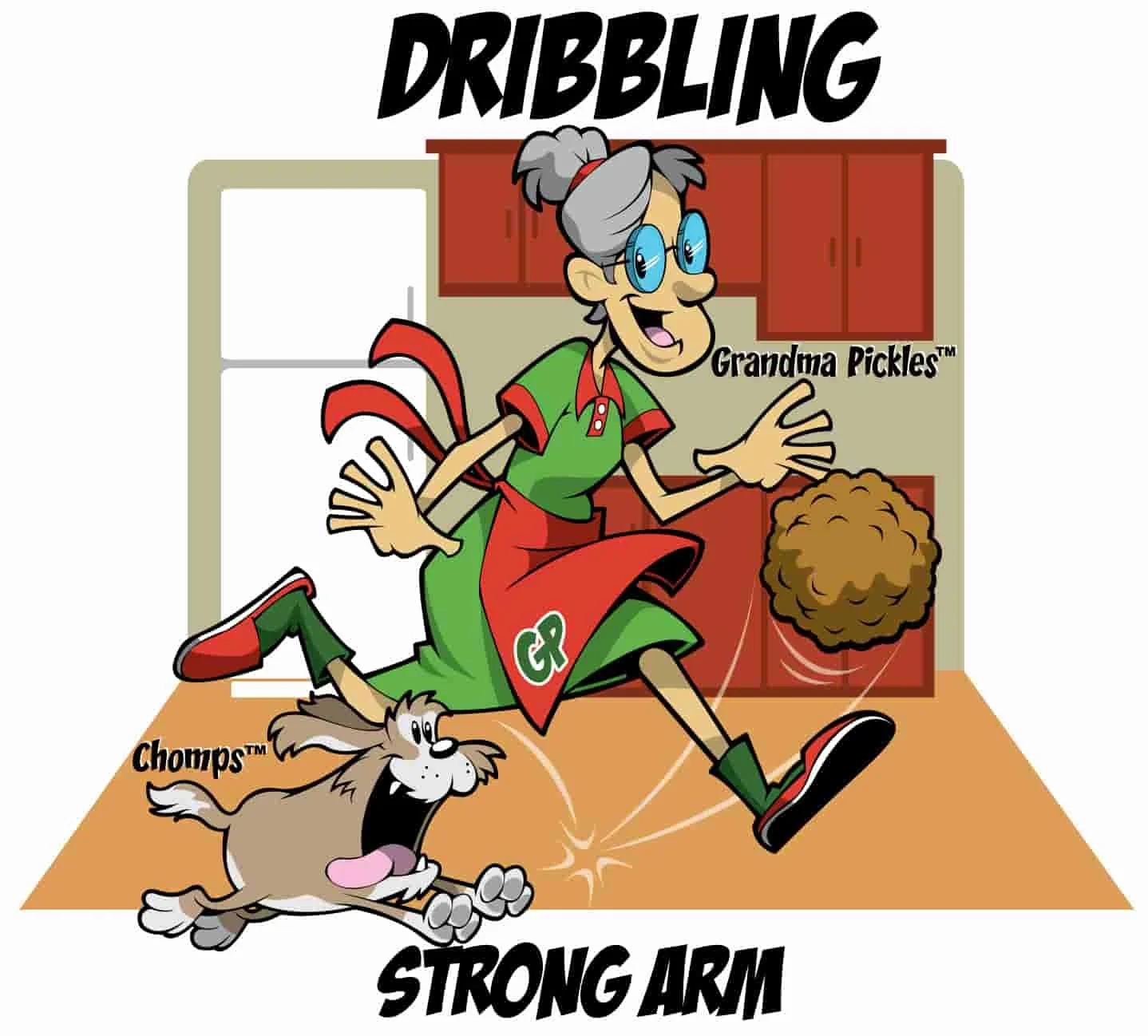
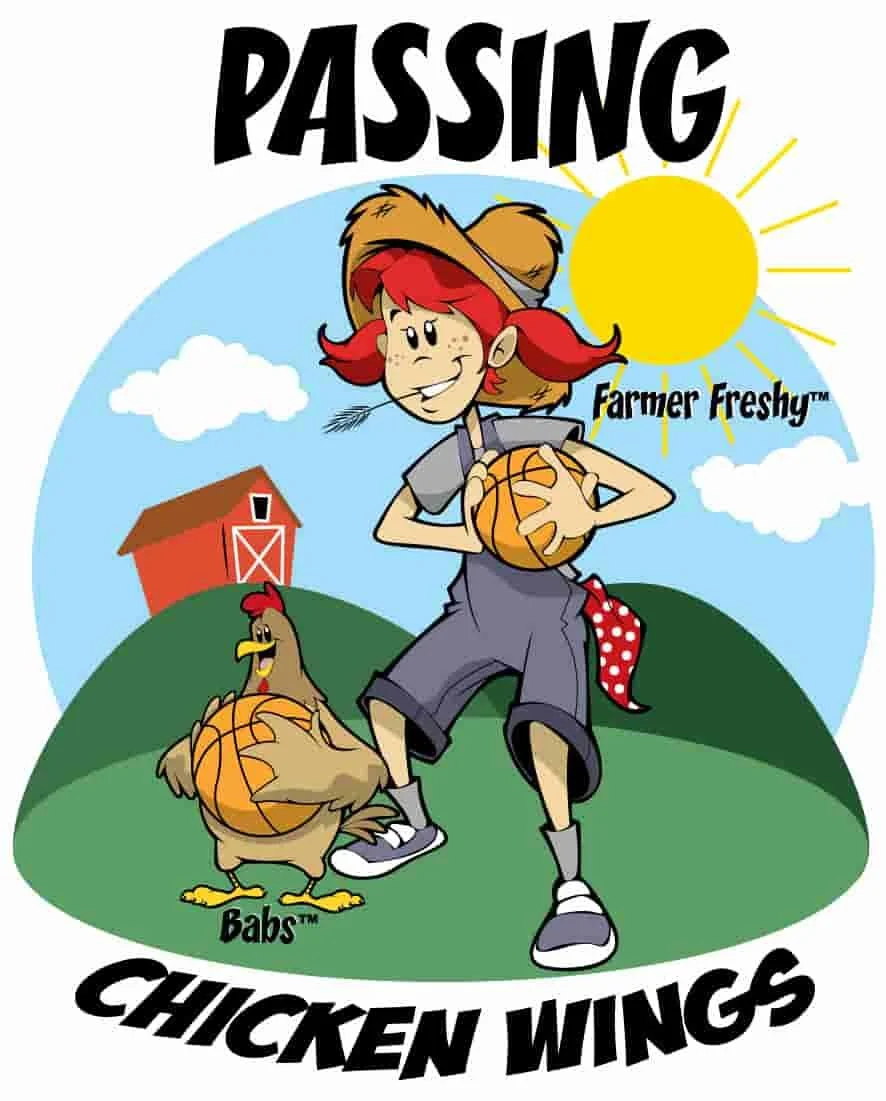
- Invented an entirely new sports language → “Meatball dribbing”, “Chicken Wings”
- Expressions of excitement/silliness: "That’s cuckoo bananas."
A New Sports Language
The Coach Pickles methodology translates complex sports concepts into child-friendly terms that toddlers and preschoolers can actually understand:
BASKETBALL EXAMPLES:
- "Pizza Position" - Proper shooting form (palm up, fingers back like holding a pizza tray)
- "Booger Finger" - Index finger pointing at your nose when shooting (ensures proper hand placement)
- "Chicken Wings Pass" - Passing technique (bent elbows, hands like chicken wings)
- "Grab the basketball by its ears" - Where to hold the ball
MOTOR SKILLS VOCABULARY:
- "Belly buttons" - Centering point for arranging body positioning and direction
- "Pump up your Tippie toes" - Center of balance point when moving backwards
- "Kiss Your Shoelaces" - Lateral movement reference for defensive shuffling
- "Scarecrow Arms" - Defensive stance with arms out
MOVEMENT GAMES:
- "On your marks, get set... Cheerios!" (Humor used to build strong listening skills)
- "Head, Belly Button, Feet" - Simple and fun ball control drill to challenge young minds
- "Little dribbles, quick feet" - Backwards, high-focus way of teaching dribbling
OTHER SPORTS CONCEPTS:
- "Parachute" - Fun tool for building teamwork and the anticipation required to catch
- "Pip Squeak the Mouse" - Teaches Soccer (Mouse) Trapping
- "Ollie Gator" - Fun baseball fielding reference
What Makes Coach Pickles Different?
FOUR CORE PRINCIPLES:
1. Mental Sweat First -
Three minutes of talking and listening before any instruction begins. It is children’s time to lead the conversation.
2. Silly > Serious -
"Where did you buy your tippie-toes? Target?" Humor and playfulness are the mechanisms through which learning happens best.
3. Kid-Friendly Language -
Scarecrow Position, Pizza Position, Booger Finger. Every sports concept translated into the experiential reality children already understand.
4. Coachability Over Talent -
Build learning readiness in ALL children, not just natural athletes. Traditional coaching favors one or two kids who "get it." Coach Pickles integrates everyone with one goal: Make Kids Coachable.
THE PROBLEM COACH PICKLES SOLVES:
Traditional coaching techniques simply do not work for young children. Coaches fumble over themselves translating instructions, and the majority of kids are left behind as coaches favor one or two athletes who "get it" more than the rest.
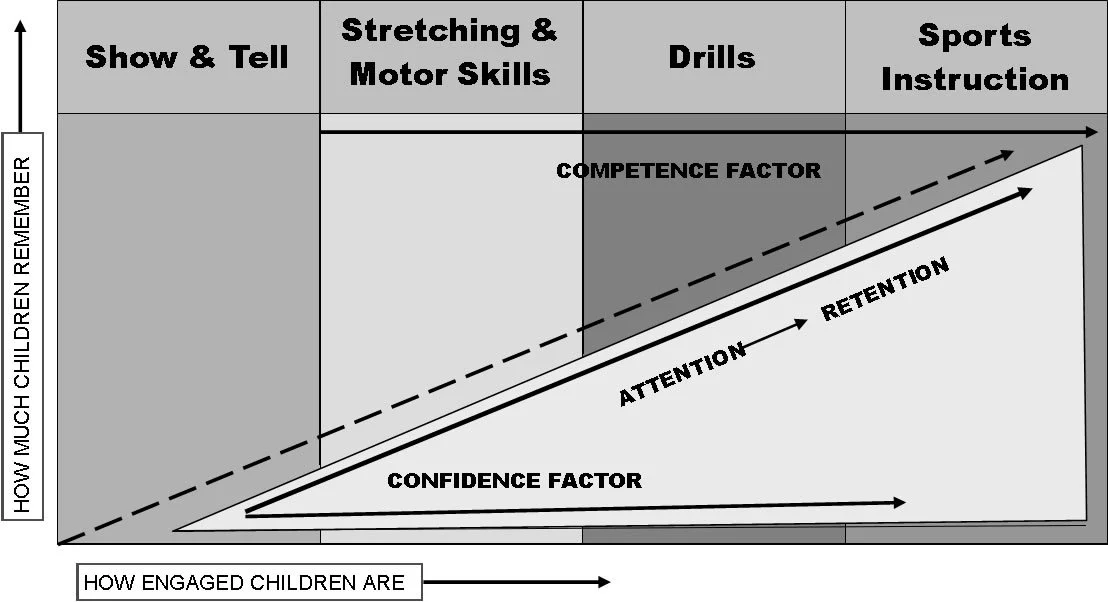
Coach Pickles' Making Kids Coachable© approach builds confidence first, then captures attention during the "prime 10-minute teaching window," creating coachability in all children—not just the naturally athletic ones.
This is the paradigm shift: coachability is not a prerequisite for instruction. Coachability is the learnable outcome.
The Four-Quadrant Instructional Model
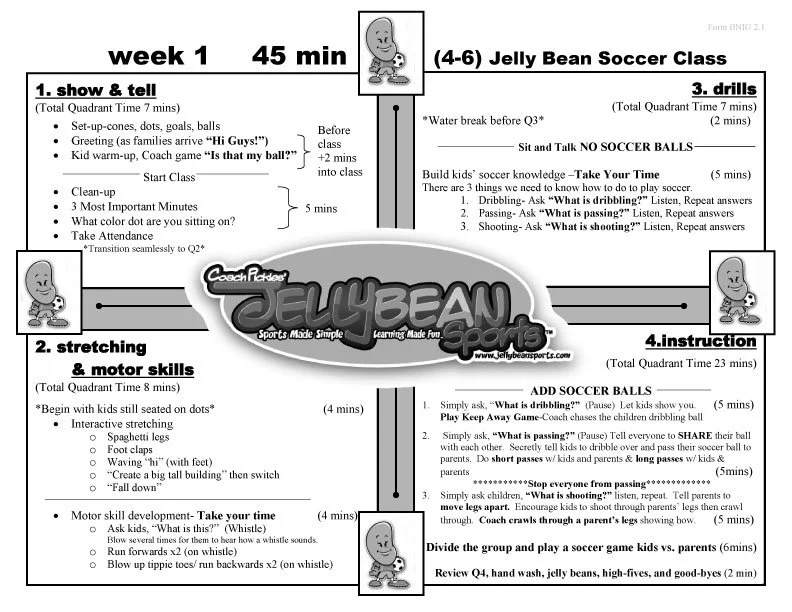
Every Coach Pickles session follows a consistent four-quadrant structure designed to maximize engagement and learning retention:
QUADRANT 1: Warm-Up / Show & Tell (7 minutes)
The three most important minutes of every class - Coach Pickles talks WITH children first.
- Kids share, feel heard, become part of group
- Builds "mental sweat" before physical activity
- Creates rapport and psychological safety
- "This is their time to talk"
QUADRANT 2: Stretching & Motor Skills (10 minutes)
- Imagination-driven stretching (make it fun!)
- Body awareness activities
- Listening games (builds coachability)
- Testing attention through play
QUADRANT 3: Drills (18 minutes)
- Sport-specific skill introduction
- Kid-friendly vocabulary application
- High engagement period (prime 10-minute teaching window)
- Scaffolding: simple → complex
QUADRANT 4: Game Play & Review (12 minutes)
- Apply skills in play context
- Celebrate learning
- Review key concepts
- Home engagement suggestions for parents
The Sesame Street for Sports
In 2006, facing 15 three-year-olds and soccer balls with zero research guidance, the foundational question emerged: "How did Sesame Street make learning look so easy?"
The Children's Television Workshop had solved this problem decades earlier. Faced with inner-city children starting kindergarten behind their suburban peers, they did something radical: they met toddlers and preschoolers where they were, rather than where adults thought they should be.
The breakthrough reframe: What if toddlers weren't "bad at sports"? What if sports were just bad for toddlers?
This became the quest: Create the Sesame Street for Sports. Twenty plus years, 15,000+ families, and approximately 10 million bubbles later, the code was cracked—how to teach toddlers and preschoolers sports in the ways they learn best.
Unlike education (which has preschool) or religion (which has Sunday school), sports have never possessed a formal early learning mechanism. Coach Pickles fills this void.
The Four-Dimensional Framework
Coach Pickles methodology succeeds because of his early learning framework that recognizes four dimensions that must all be present:
DIMENSION 1: DEVELOPMENTAL INTERCONNECTION
Universal success principles connecting birth through elite athletes. Recognize that children 18mo-5yr is a distinct developmental stage with unique needs. Children’s typical window for their first formal introduction to sports. Match every activity to the current developmental capability.
DIMENSION 2: CULTURAL PROTECTION
No competitive pressure or premature specialization. Shield children from "win at all costs" mentality. Create emotionally safe learning environments where 100% success rate is possible.
DIMENSION 3: FLOW OPTIMIZATION
Sustained engagement mechanisms (Csikszentmihalyi, 1990). Match challenge level to developmental capacity. Fun is not a bonus—it's the mechanism through which learning happens best.
DIMENSION 4: PARENT INTEGRATION
Parent-child co-learning (optimal). When parents are unavailable, adult co-participation by teachers provides alternative model. Parents participate ON THE FIELD, not as spectators.
Longitudinal Implementation Study Results
FIELD RESEARCH EVIDENCE:
- 20+ years of field implementation
- 15,000+ families served
- Zero serious injuries (demonstrating age-appropriate methodology)
- High retention rates through developmental progression
- Consistent outcomes across diverse populations, socioeconomic contexts, and sports environments
Related frameworks
Coach Pickles operates within an integrated theoretical architecture:
→ The Natural Order of Sport© - Establishes birth as the authoritative origin point of athletic development
→ The Governing Dynamics of Sport© - Applies Nash's economic equilibrium theory to explain why traditional systems fail systemically
→ The Jelly Bean Way© - The complete implementation methodology for early learning sports development (ages 18 months–5 years)
→ Making Kids Coachable© - The operational architecture embedded within The Jelly Bean Way© produces coachability as an emergent meta-skill
Together, these frameworks establish Early Learning Sports Development as a distinct academic field with a complete theoretical, economic, and operational architecture.